Across Indian Country, Tribal Nations, families, schools, and community organizations are working to protect, reclaim, and strengthen Native languages. College and career planning can support this work by helping Native youth recognize language as a source of identity, knowledge, leadership, and purpose.
For some students, language is part of daily family and community life. Others may be beginning to learn their language, reconnecting after generations of language loss, or living far from opportunities to study it. Because colonization and assimilation policies disrupted the transmission of Native languages, students should never be judged by their level of fluency or access.
A culturally responsive approach meets each student where they are. It allows language to become part of college planning when that connection is meaningful to the student—without measuring cultural identity by whether someone speaks their Tribal language.
Here are four ways counselors and educators can thoughtfully connect Native language revitalization with college planning.
Native language learning can connect students with family, community, land, ceremony, history, and ancestral knowledge. These relationships may also help students identify what they value, how they want to serve their communities, and what they hope to pursue after high school.
Counselors and educators can invite students to consider these connections without assuming that every student has the same experiences.
- What role, if any, does language play in your family or community?
- Are there words, teachings, stories, or traditions that are especially meaningful to you?
- Would you like language or culture to be part of your college experience?
- How might your education help you contribute to language preservation or revitalization?
- Are there careers that would allow you to use or support your Tribal language?
Language experiences may also provide meaningful material for college applications and scholarship essays. A student might write about learning from a grandparent, participating in a language program, reconnecting with their identity, or imagining how their future career could contribute to their community.
This approach aligns with culturally responsive college counseling practices that affirm identity, recognize community knowledge, and connect education with a student’s larger sense of purpose. Read more in Supporting Native American Students in College Planning.
A college’s academic offerings are important, but they are only one part of the search. Students may also want to know whether their language, culture, and community relationships will be respected and supported on campus.
Tribal Colleges and Universities are especially important leaders in language preservation and revitalization. Some offer language courses, immersion experiences, teacher-preparation pathways, community-based research, and programs developed in direct relationship with the Tribal Nations they serve.
Other colleges and universities may offer Native American or Indigenous Studies, linguistics, Tribal governance, education, environmental studies, or Traditional Ecological Knowledge opportunities that connect with a student’s interests.
- Courses in the student’s own Tribal language or other Indigenous languages
- Native American or Indigenous Studies programs
- Native student centers and culturally grounded student organizations
- Language tables, conversation groups, or immersion opportunities
- Elder-in-Residence or Cultural Advisor programs
- Partnerships with nearby Tribal Nations and Native communities
- Research or service opportunities related to language revitalization
- Teacher-education pathways for future Native language educators
Students should look beyond a college’s promotional language and ask how these programs operate in practice. Who leads them? Are Tribal Nations involved? Are Native students able to build genuine relationships with Native faculty, staff, Elders, and community members?
Language revitalization does not need to be treated as separate from college readiness. Schools and Native education programs can build language, identity, and community knowledge into the activities students use to explore colleges and careers.
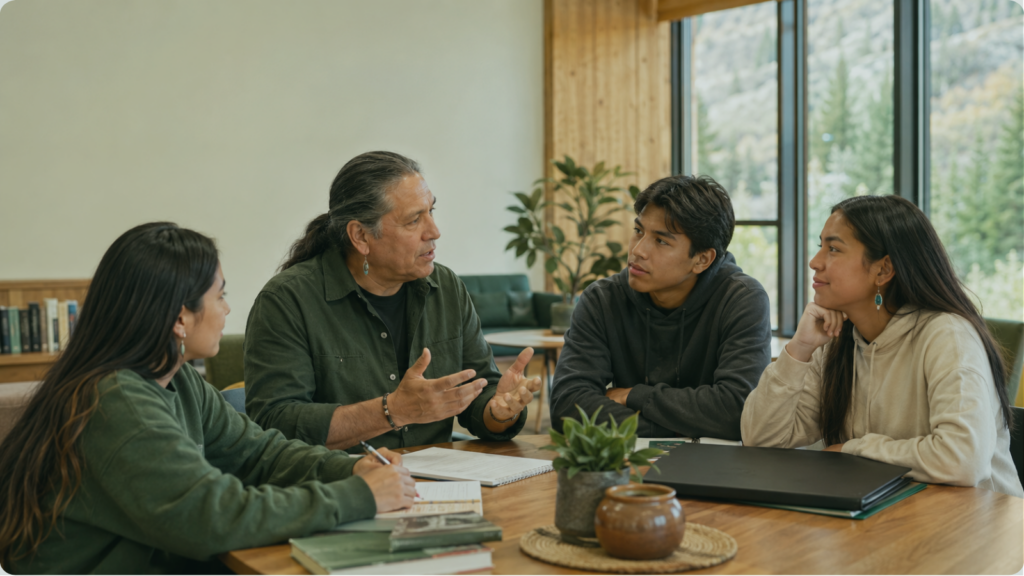
Students might also interview a language teacher, Elder, family member, Tribal education professional, or college representative. These conversations can help them see that language knowledge connects with many possible educational and career pathways.
The goal is not to direct every student toward a language-centered career. It is to help students recognize that their cultural knowledge belongs within conversations about their futures.
Schools can create opportunities for students and families to explore how college, career development, and language revitalization intersect. These experiences are most meaningful when they are developed with local Tribal Nations, Native families, language educators, and community organizations.
- Invite Tribal language educators and community members to participate in college and career events.
- Highlight colleges with Native language, Indigenous Studies, or Tribal governance programs.
- Offer essay, art, audio, or storytelling projects through which students can explore language and identity.
- Help students research scholarships connected with Native identity, community leadership, education, or language preservation.
- Connect students with Native college students, faculty, and professionals whose work supports language and culture.
- Partner with Tribal education departments when planning campus visits and transition activities.
- Include families and trusted community members in college-planning conversations when the student wants their involvement.
Schools should also recognize that language revitalization belongs to Tribal Nations and communities. Educators can support this work respectfully, but they should not treat Native languages as classroom themes or cultural activities disconnected from the people to whom those languages belong.
- Native language can be a source of identity, connection, knowledge, and future purpose.
- Students should be invited—but never pressured—to include language and culture in college planning.
- Fluency is not a measure of a student’s identity or cultural belonging.
- College searches can include language courses, Native student support, Indigenous academic programs, and relationships with Tribal communities.
- Language-related experiences may strengthen personal statements, scholarship essays, and career exploration.
- Schools should develop language-related programming in respectful partnership with Tribal Nations, families, and Native communities.
College planning is often presented as preparation to leave home and begin something new. For Native youth, it can also be a way to carry relationships, responsibilities, teachings, and language forward.
When counselors and educators honor Native languages within the planning process, they help students imagine education as an extension of their identity—not a departure from it. College can become one more place where Native students strengthen their voices, build new knowledge, and contribute to the futures of their families and Nations.
CollegeBound Journey® provides college-search tools, culturally responsive learning resources, and planning support developed specifically with Native students in mind.
Explore the College Search Request a Demonstration